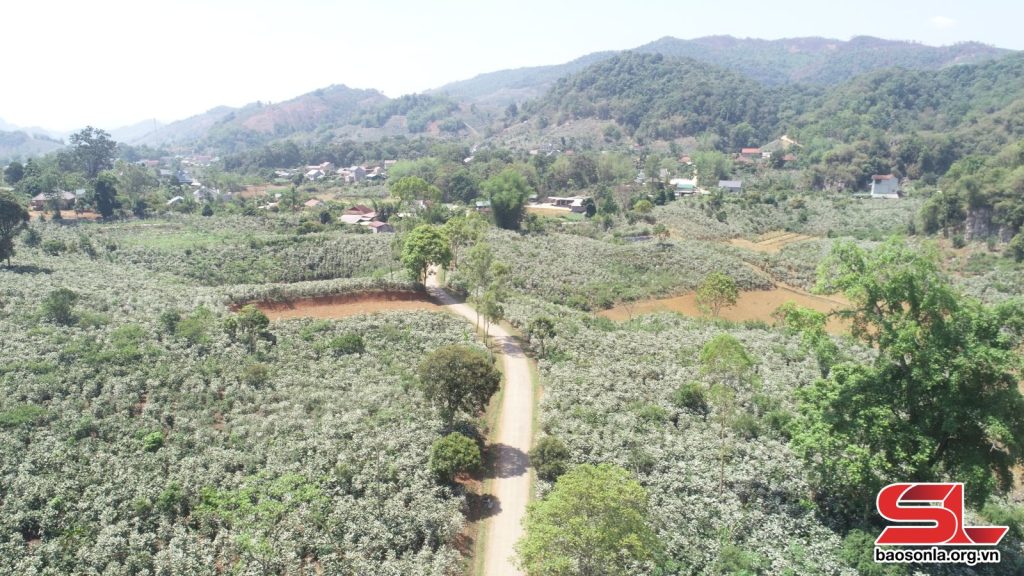
(TITC) – Tay Ninh is renowned not only for the sacred beauty of Ba Den Mountain and Dau Tieng Lake but also as a region preserving numerous traditional rural industries closely tied to the local community’s history. The values of garden culture, local specialties, and simple rural lifestyles create a unique appeal, making the province highly suitable for experiential tourism. In 2025, Tay Ninh aims to develop rural industries in a manner closely integrated with tourism while prioritizing environmental protection, pursuing sustainable development and improving local livelihoods.
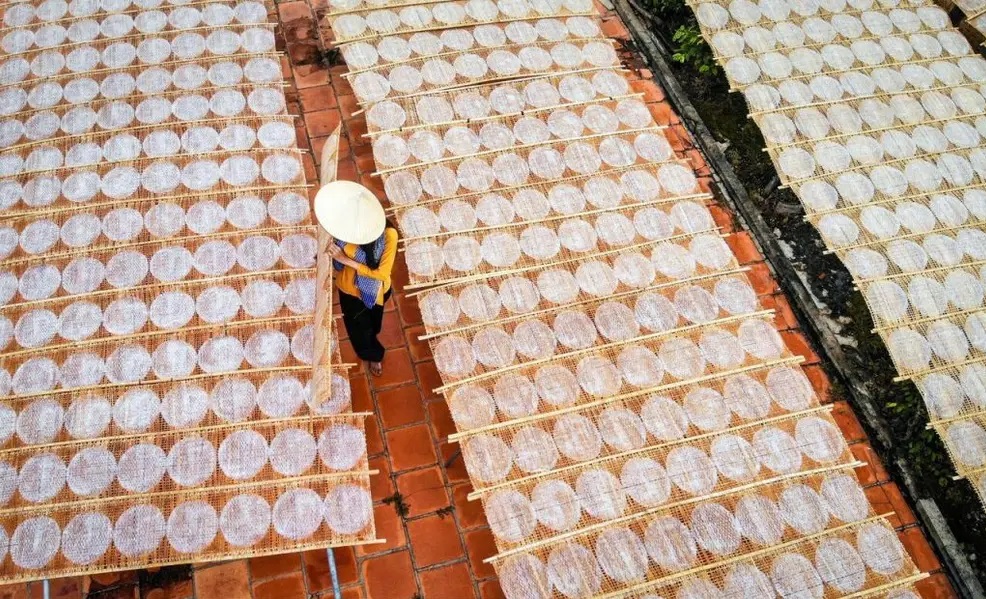
A stage in making dew-dried rice paper in Trang Bang (Tay Ninh)
Reviving Traditional Crafts and Creating Engaging Tourism Experiences
Tay Ninh is home to many distinctive handicraft and culinary industries, such as the Trang Bang dew-dried rice paper, shrimp salt production, toddy sugar processing, basket weaving, and clean mushroom cultivation. These products have become recognized “brands” of the province, sought after by visitors. Instead of limiting activities to production and sales, Tay Ninh is gradually transforming these craft villages into tourism destinations, where visitors can experience the entire production process from raw materials to finished products.
In Trang Bang, tourists can observe artisans stretching rice paper and sun-drying it in the gentle morning sunlight. At shrimp salt facilities, visitors are guided through chili grinding, salt roasting, and packaging processes. In the agricultural regions of Tan Chau and Tan Bien, tourists have the opportunity to immerse themselves in the green spaces of clean farms, harvest vegetables and fruits by hand, and enjoy rustic meals right in the garden. These gentle yet authentic experiences allow visitors to gain a deeper understanding of local culture and develop appreciation for traditional labor.
Community participation is central to these craft village tourism models. Residents act as guides and storytellers, sharing their homeland’s heritage, fostering natural, warm, and memorable connections with visitors.

Visitors experience making rice paper
Promoting Sustainable Tourism Linked to Environmental Protection
Alongside economic development, Tay Ninh places strong emphasis on environmental protection, an essential factor in building a green and sustainable tourism image. Craft village production facilities are guided to treat wastewater and solid waste according to standards and to limit plastic packaging, replacing it with environmentally friendly materials. Organic production models, reduced chemical usage, and eco-friendly practices are encouraged and gradually expanded.
In tourism, destinations are designed to preserve landscapes, rural spaces, orchards, and natural ponds. Visitors to Tay Ninh are encouraged to travel responsibly: avoid littering, respect local culture, and protect shared environments. As a result, Tay Ninh’s image is appreciated not only for its scenery but also for the harmonious balance between people and nature.
The province actively promotes and publicizes craft villages, farms, and community tourism models across multiple platforms, collaborating with travel businesses to offer one-day experience tours, culinary tours, and traditional handicraft tours. This approach brings Tay Ninh’s products and image closer to both domestic and international visitors.
Linking rural industry development with tourism and environmental protection is not only a strategic approach but also an opportunity for Tay Ninh to build an identity as a culturally rich, green, and visitor-friendly destination. Tourism connects visitors to the simple daily life of rural communities, while traditional crafts form the soul and unique character of the region. When these two elements are combined with environmental consciousness, Tay Ninh can achieve sustainable development, improve local livelihoods, and become a standout destination on Vietnam’s tourism map in the future.
Tourism Information Technology Center