(TITC) – Deep in the vast Central Highlands, where the echo of gongs and drums lingers through festive nights, ruou can (fermented rice wine drunk through bamboo straws) has long stood as a cultural symbol, embodying the soul and identity of local ethnic communities. More than just a traditional drink, ruou can is a sacred thread that binds people to one another, to nature, and to their ancestors.
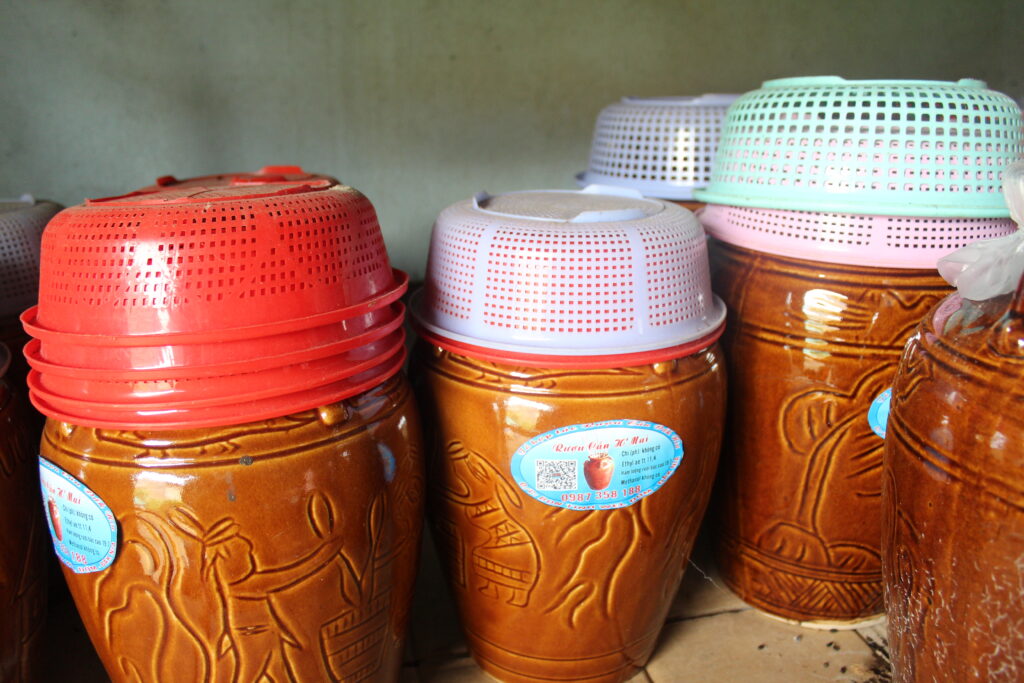
Ma people’s wine jar (Photo: TITC)
While the ruou can of the Ma people may not be as well-known as that of the Ede, Mnong, Jarai, or Bana groups, its distinctive flavour and handcrafted production methods give it an unmistakable character, one that speaks deeply of the mountains and forests from which it comes.
The Ma people’s ruou can is entirely handmade, the result of ancestral knowledge carefully preserved and refined over generations. The process begins with preparing the earthen jars (che) used for fermentation. After being cleaned, each jar is rinsed with water boiled from the leaves of the Rdong plant. During sun-drying, the boiled leaves are placed inside the jar until they, too, dry completely, a sign that the jar has reached the right degree of dryness for fermentation. When treated properly, the jars ensure that the wine does not turn sour, retaining its characteristic aroma and improving in flavour over time.
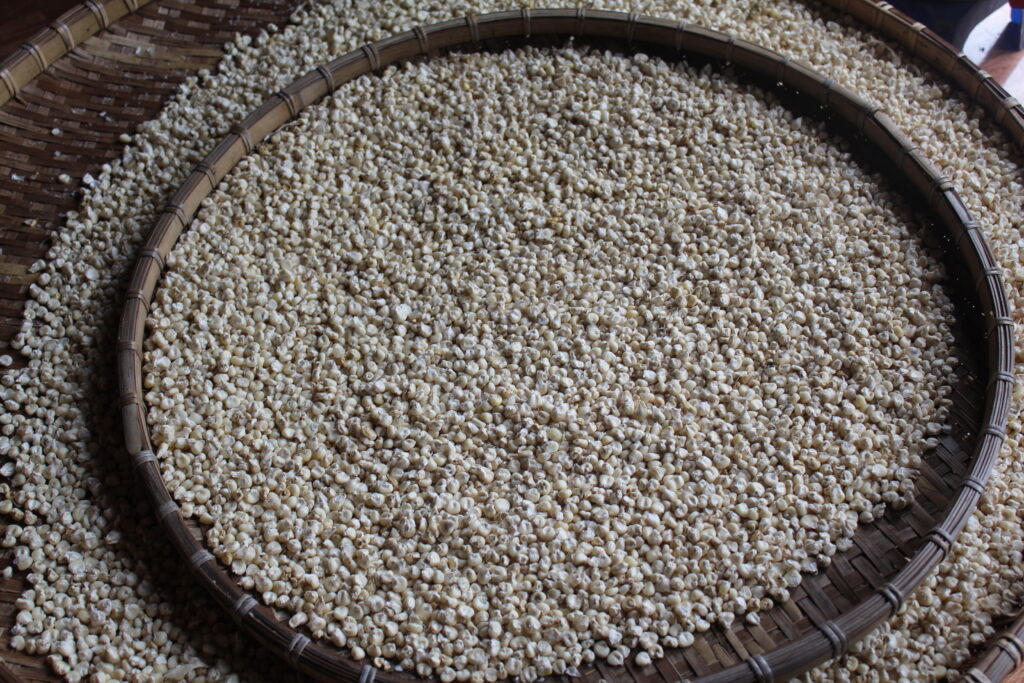
Ingredients for brewing wine (Photo: TITC)
The secret to the wine’s rich, complex taste lies in its fermentation starter (men ruou), made from more than ten kinds of forest leaves, barks, and roots. These ingredients are foraged by Ma women deep in the forest, then dried, ground, and mixed with glutinous rice powder. Each family has its own recipe, its own blend of forest botanicals, creating subtle variations in taste that make every household’s ruou can unique.
The process requires patience and skill. Sticky rice is steamed, mixed with the herbal yeast, and sealed in clay jars covered with dried banana leaves. The jars are then stored in cool, dry places to ferment for about three months. As the wine matures, its aroma becomes richer and more inviting.
When it’s time to drink, the Ma people never pour ruou can into cups. Instead, long bamboo straws, the “can” are inserted directly into the jar. Each sip carries the sweetness of glutinous rice, the warmth of forest herbs, and the earthy fragrance of the Central Highlands.
Ruou can holds a sacred place in the spiritual life of the Ma people. It is indispensable during important ceremonies and festivals, from harvest celebrations and weddings to water-source worship and funerals. Yet to drink ruou can is not merely to enjoy its flavour; it is to partake in a moment of togetherness.
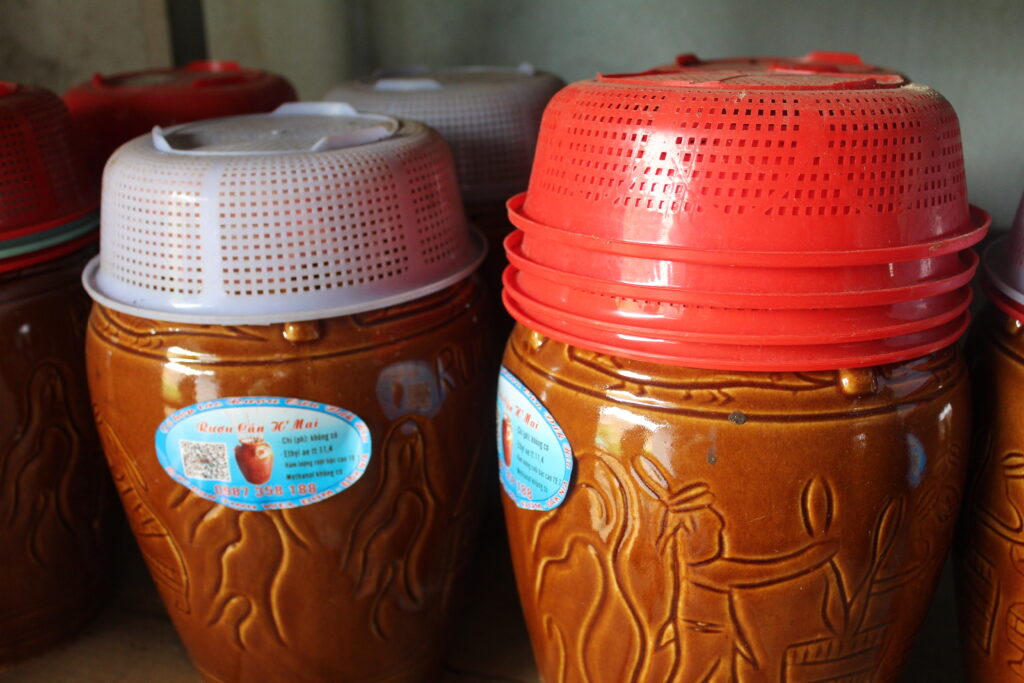
Ruou can is closely tied to the cultural and spiritual life of the Ma people (Photo: TITC)
Around the communal jar, people gather to sing, dance, tell stories, and share laughter. The bamboo straws are passed from hand to hand, the wine flowing from mouth to heart, dissolving barriers, deepening bonds, and weaving a circle of warmth and unity.
In the highlands of Lam Dong, where mist drifts through the ancient forests, the Ma people’s ruou can endures as more than a beverage, it is a living expression of community, heritage, and the enduring spirit of the Central Highlands.
Tourism Information Technology Center