(TITC) – In Vung Tau, Long Son fishing village and Phuoc Tinh one-sun-dried squid craft village have emerged as two representative models of coastal agricultural–rural tourism. Both preserve the cultural identity of the sea, create stable livelihoods for local communities, and form an integrated chain of community-based tourism services typical of the Southeast coastal region.
Long Son Fishing Village: A Rural Coastal Landscape Rooted in Lagoon Livelihoods
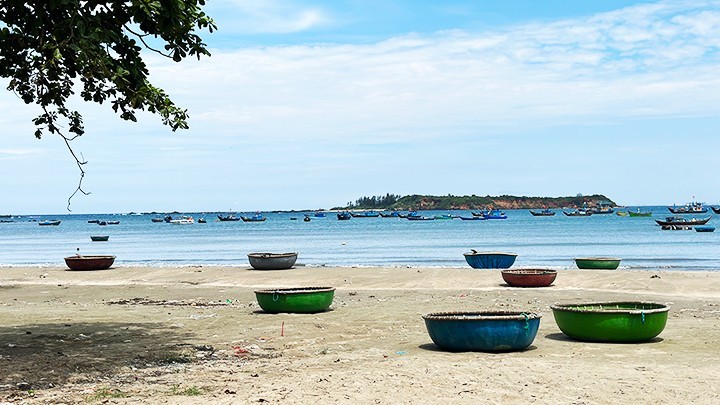
Situated beside the large brackish-water Dinh Lagoon, Long Son is a long-established settlement whose residents are closely tied to oyster, blood cockle, and cobia farming. The village is known for its system of floating houses and aquaculture rafts spread across the water surface. Although located near the coast, Long Son retains all the characteristics of a rural coastal community – where livelihoods depend on nature, manual labor, and indigenous knowledge passed down through generations.
The most distinctive feature of Long Son is its brackish-water aquaculture model, which combines production with tourism. Visitors can travel by small boat to explore oyster, clam, and fish rafts; take part in activities such as harvesting, sorting, washing, or preparing oysters on site; and learn about local knowledge related to tides, wind seasons, and oyster-planting techniques. These skills, preserved through centuries, give Long Son’s aquaculture a uniquely experiential value.
This blend of daily labor and visitor participation has created a model of “experiential aquaculture tourism,” enabling local people to increase income while maintaining their traditional way of life.
Long Son is also home to the Long Son Big House, a cultural–religious complex associated with the Tran Sect. Its wooden architecture, communal space, the annual Trung Cữu Festival (on the 15th day of the 9th lunar month), and the community’s simple, harmonious lifestyle highlight a distinct coastal rural cultural identity. Tourism here relies not on artificial constructions but on authentic community culture and natural landscapes, aligning well with Vietnam’s sustainable rural tourism orientation.
Phuoc Tinh One-Sun-Dried Squid Village: A Seafood Value Chain Linked to Rural Tourism
Not far from Long Son lies Phuoc Tinh), an old fishing community famed for its traditional seafood processing, particularly the iconic one-sun-dried squid. This craft village represents a typical coastal rural tourism model that links production, processing, consumption, and tourism into a complete value chain.
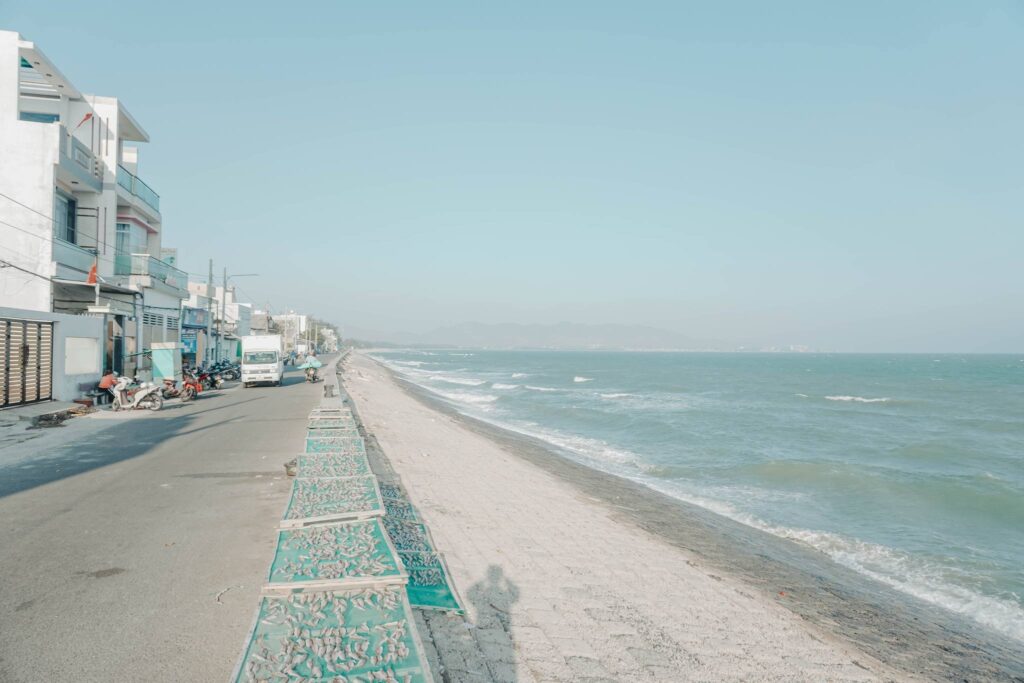
In the early morning, visitors to Phuoc Tinh will encounter a familiar sight: long rows of drying racks covered with fresh squid glistening under the coastal sun. Tourists can visit the drying areas, learn how squid is selected, discover the techniques behind the “standard one-sun” drying method, and interact with local artisans to hear how they maintain the squid’s natural sweetness and distinctive texture.
Visitors may also try simple processing steps such as arranging squid on racks, turning them during drying, or helping with packaging. Grilled squid served with local chili salt adds an unforgettable culinary experience. These activities truly capture the essence of coastal rural tourism – where visitors can “work alongside farmers and fishermen,” learn local crafts, and appreciate the value of regional specialties.
A Dual Model Strengthening Vung Tau’s Sustainable Coastal Tourism
Together, Long Son fishing village and Phuoc Tinh one-sun-dried squid craft village illustrate how agricultural–rural tourism can be meaningfully developed in harmony with marine culture. Grounded in local livelihoods and traditional practices, these models help diversify tourism experiences, enhance community income, strengthen destination identity, and contribute to the sustainable development of Vung Tau’s coastal tourism in the new period.
Tourism Information Technology Center