(TITC) – If Huế is often described as a quiet, poetic former imperial capital, then Phuoc Tich Pottery Village – nestled along the gentle O Lau River – feels like its most peaceful, authentic fragment. There are no crowds, no rush, no glittering attractions here. Instead, Phuoc Tich welcomes you with a softness that only a centuries-old craft village can offer: unhurried rhythms, rustic charm, and a quiet pride that has endured more than 500 years.
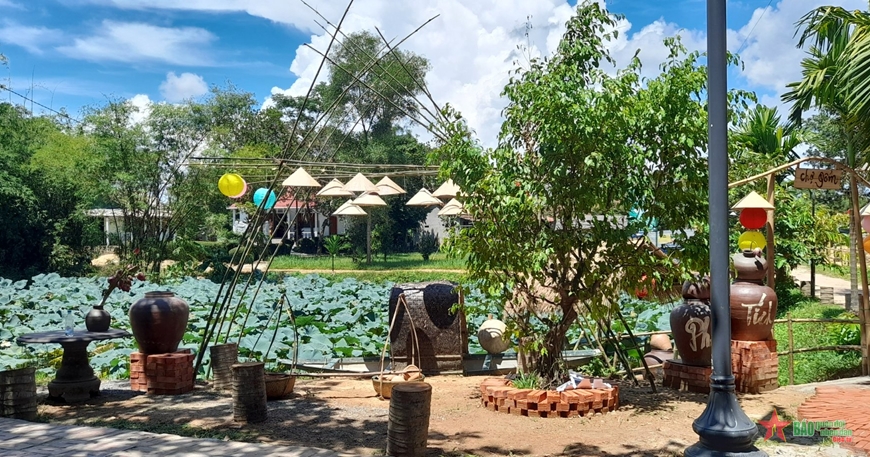
The road into the village winds under a canopy of green, passing tall hedges trimmed into neat lines. The silence is so complete you can hear birds singing on the mossy roofs of ancient wooden houses, the whisper of wind sliding past old wooden shutters. With each step, you drift further back in time – into an era when life revolved around pottery wheels and riverbank farms.
Venture deeper, and you’ll find the homes of artisans who still “keep the fire alive.” A warm greeting is often all it takes for an elder craftsman to invite you to sit by a pottery wheel and try your hand at shaping clay – an experience far more captivating than it first appears.
Phuoc Tich pottery emerged alongside the village itself and reached its golden age in the 18th and 19th centuries. Its wares were once treasured by the Nguyễn Dynasty, selected as “tribute ceramics” for their elegance – everything from clay urns and lime pots to jars and water vessels.
What defines Phuoc Tich pottery is its understated beauty. Unglazed and earthy, each piece is crafted from clay taken directly from the O Lau River. The ceramics are thick, sturdy, and deep brown, radiating a simple charm that mirrors the soul of rural Hue. Decorative motifs are minimal – carved lines, concentric circles, and geometric patterns – yet they carry a humble grace unique to this village.
One of the most distinctive traditions preserved here is the straw-firing technique, rarely found elsewhere. After being shaped on a hand-turned wheel and dried naturally in the sun, every piece is fired using rice straw – a meticulous process that demands both skill and intuition.
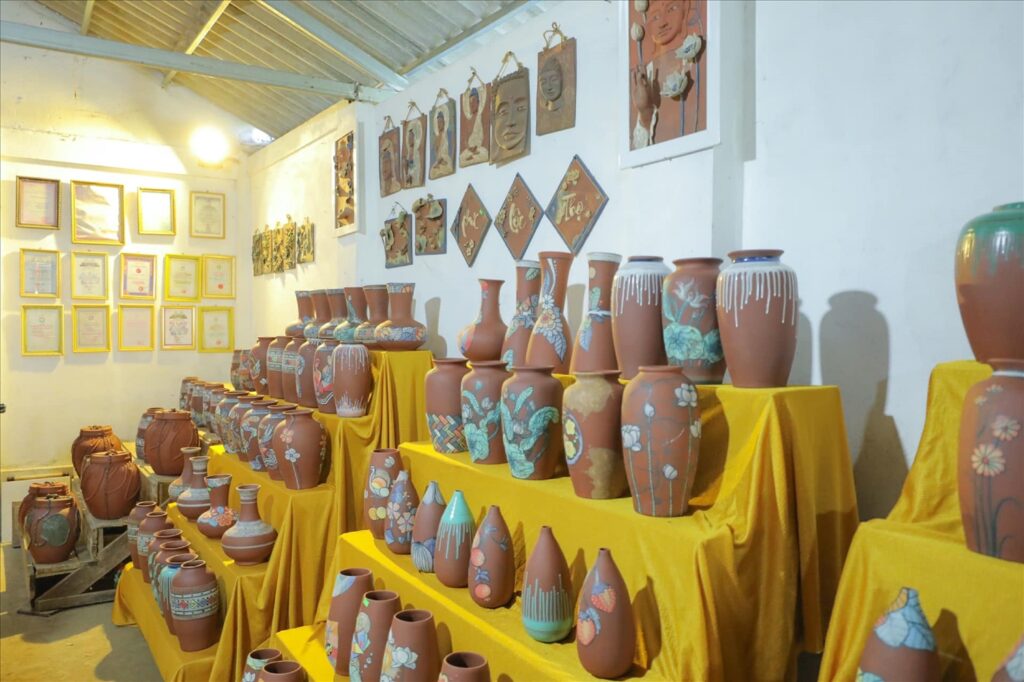
The clay of Phuoc Tich is fine, malleable, and carries a subtle earthy scent. Place your hands on the spinning mound and you’ll feel a sense of calm wash over you. Molding a small cup or vase often sparks childlike joy – like rediscovering a forgotten, simple happiness.
Unlike many villages that have switched to gas kilns, Phuoc Tich still relies on wood-fired kilns. Logs are arranged carefully inside, and the fire burns for hours, giving each ceramic piece its characteristic smoky-brown hue, smooth surface, and remarkable durability.
But what lingers most in memory is the warmth of the villagers. They are eager storytellers, recounting the origins of the craft and the royal objects once made here. For them, pottery is not just a livelihood – it is heritage. A vessel of memory. A link to their ancestors.
A visit to Phuoc Tich is more than a stroll through a tranquil village; it is an immersion into the cultural and artistic heart of rural Hue. Every moment offers something both fresh and familiar – a reminder of the enduring beauty of craftsmanship and community.
Phuoc Tich is not a tourist hotspot – and that is precisely its charm. It is a sanctuary for those seeking stillness, authenticity, and a deeper connection with Vietnamese culture. Here, the beauty lies in time itself: in earth and fire, in tradition and persistence, and in the hands of artisans who continue to guard a craft passed down for more than half a millennium.
Tourism Information Technology Center