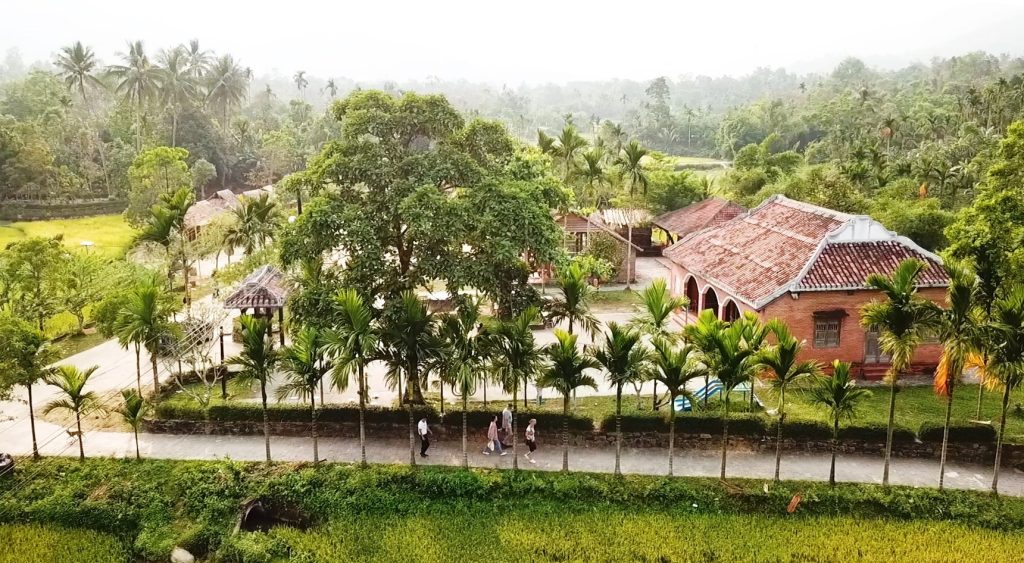
(TITC) – From the old Cao Bang City heading west, travelers will encounter dozens of geological, ecological, and cultural heritage sites, centered around Phja Oac – Phja Den National Park and the Special National Historic Site of Tran Hung Dao Forest. This route, part of the Non Nước Cao Bằng UNESCO Global Geopark, reveals the natural and historical processes that have shaped this mountainous land over millions of years.

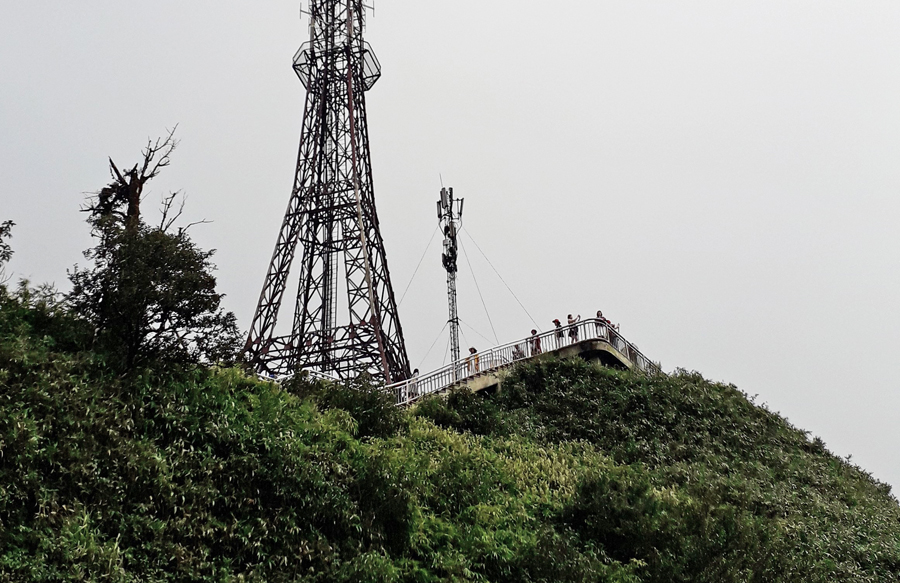
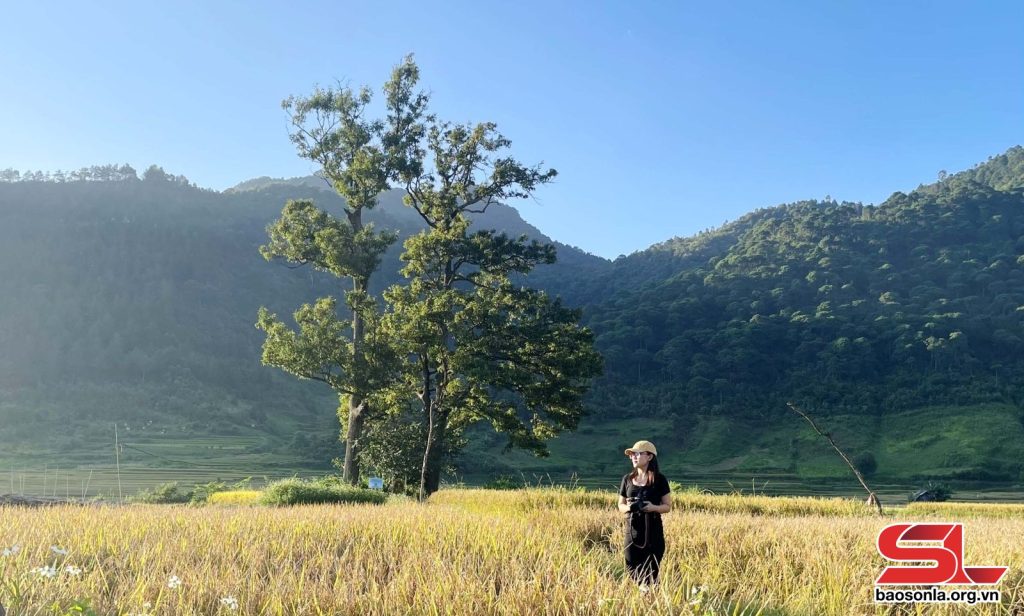
Visitors experience the summit of Phja Oac (Photo: TITC)
Lang Mon Ancient Coral – A Window into an Ancient Sea
Over 400 million years ago, this region was once a shallow sea. Sediments accumulated here, forming layers of limestone rich in marine fossils, evidence of a long, diverse, and thriving oceanic environment. Most of these fossils belong to coral species that lived at depths of 20-50 metres in warm waters of 18-20°C. Fossils of crinoids (sea lilies), sessile animals that attached themselves to rocks and shells, have also been found.
Today, only about 300 species of crinoids survive in cold, deep marine environments, while most became extinct during the global mass extinction event 252 million years ago. These fossil remains in Lang Môn stand as geological witnesses to the planet’s ancient transformations.
The Embroidery Workshop of the Dao Tien People
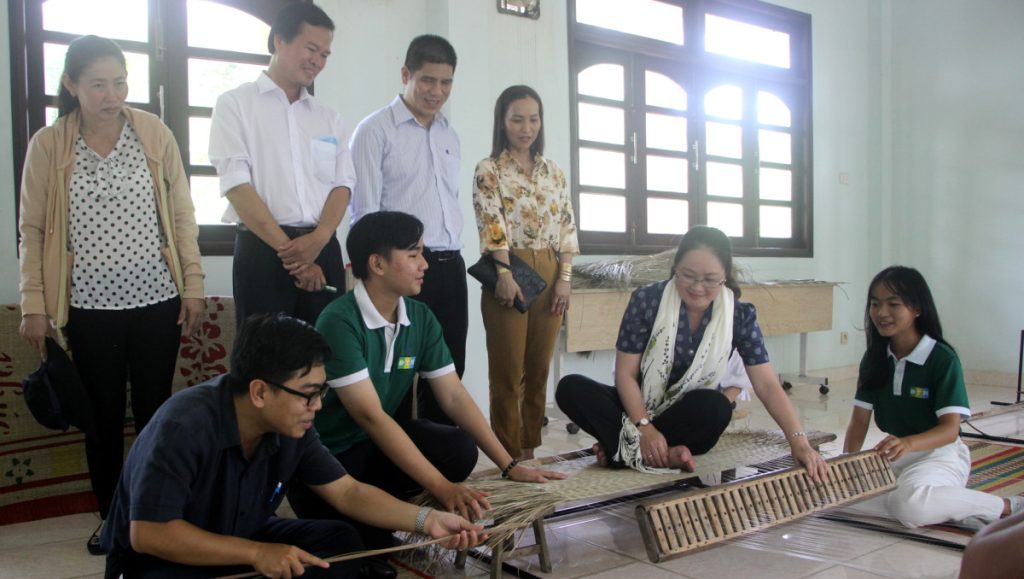
In Tam Kim Commune, the Dao Tien ethnic women continue to preserve and develop their traditional embroidery and beeswax patterning craft. According to their customs, every Dao girl must learn sewing and embroidery to make her own wedding dress before marriage.
The exquisite brocade works feature motifs filled with symbolism:
Multi-pointed stars represent the power of nature,
Dogs symbolize Ban Vuong, the Dao people’s revered ancestor, a reminder to honor one’s roots,
Eight-petaled flowers or cockscomb motifs, often seen on headdresses and shirt fronts are symbols of good fortune.
These embroidered textiles are used for clothing, scarves, blankets, baby carriers, pillow covers, and bedspreads. Nowadays, they are also transformed into decorative items, handbags, and souvenirs, blending tradition with modern creativity.
Mao Ga Mountain – Nature’s Majestic Crest
Located along the provincial road in Tam Commune, Mao Ga Mountain (literally “Cockscomb Mountain”) is a striking example of geological diversity. Its landscape contrasts two terrains:
Flat-topped hills with soft slopes formed on shale rocks about 250 million years ago (Triassic period), and
Rugged limestone ridges with steep cliffs and fault lines dating back 400 million years (Devonian period).
Together, these formations create a massive crest-like shape, hence the mountain’s name.
Phai Khat Fortress – The Birthplace of Victory
Recognized as a National Historical Site in 1993, Phai Khat Fortress in Tam Kim Commune is one of the key locations within the Tran Hung Dao Forest Special National Site. It is linked to the first battle of the Vietnam Propaganda Liberation Army (the forerunner of the Vietnam People’s Army) on 25 December 1944, led by General Vo Nguyen Giap himself.
Originally the house of Mr. Nong Van Lac, the fortress was seized by French colonial forces to suppress revolutionary activities. Though small in scale, the victory at Phai Khat marked a crucial milestone, bolstering the confidence of revolutionary soldiers and laying the foundation for future triumphs.
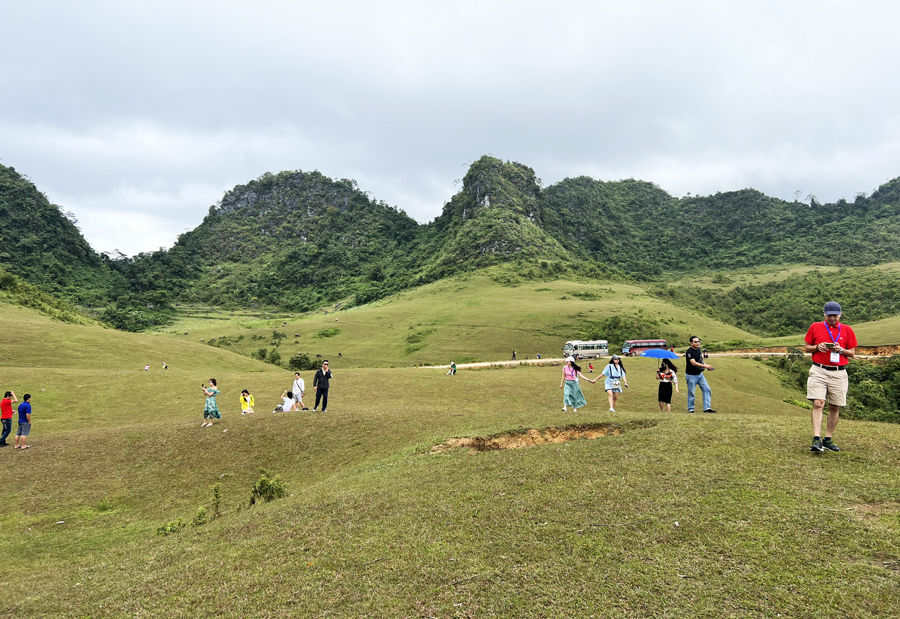
Visitors experience the summit of Phja Oac (Photo: TITC)
The Landscapes of Phja Oac – Nature’s Diverse Symphony
With peaks soaring up to 1,931 meters above sea level, Phja Oac is the second-highest mountain in Cao Bang Province. Its terrain is complex, characterized by steep slopes, narrow valleys, and a mosaic of clastic, limestone, and granite rocks. This geological diversity has produced various mineral resources such as wolfram (Ban O and Lung Muoi), tin (Tinh Tuc), and radioactive fluorite (Binh Duong).
Phja Oac’s distinct topography and cool, misty climate nurture unique ecosystems, from mossy dwarf forests to lush highland jungles. Beyond its natural wonders, the region is alive with ethnic culture, reflected in the colorful attire, music, and customs of the Dao, Nùng, Kinh, Tày, and Mông communities.
A Journey Through Change and Heritage
Exploring the route “Phja Oac – The Mountain of Transformations”, visitors can experience not only nature and geology but also living culture and history. Highlights include: Vo Nguyen Giap Route, Tinh Tuc Tin Mine, Lung Muoi Wolfram Mine, Dragon’s Back Landscape, Tinh Tuc Hanging Valley, and Kolia Tea Plantation.
Each destination offers a unique story, from the depths of ancient seas to revolutionary milestones, making Phja Oac not just a mountain range, but a vivid chronicle of Earth’s and humanity’s evolution in Cao Bang.
Tourism Information Technology Center