(TITC) – Located around 30 kilometres southwest of central Hanoi, Chuong Village, now part of Thanh Oai Commune, has long been renowned throughout Vietnam for its traditional craft of making conical hats. For generations, the village has been associated with the iconic image of the pure white non la – a palm-leaf hat that is soft yet durable, simple yet elegant, and deeply symbolic of the grace and gentleness of Vietnamese women. Over time, the Chuong conical hat has become more than a functional object; it has grown into a cultural emblem recognised across the country.
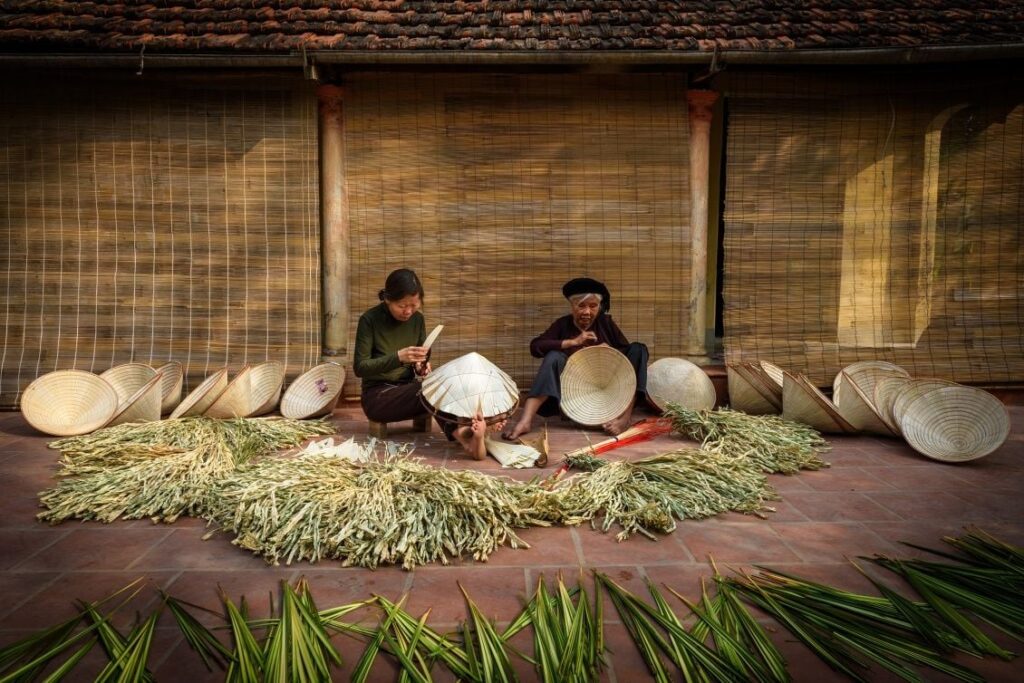
Making conical hats (Photo: Collection)
The craft of hat-making in Chuong Village dates back several centuries. Despite the many changes brought about by history, the villagers have preserved their traditional craft with remarkable dedication. According to village elders, when the surrounding landscape was still dominated by vast rice fields, local people already knew how to use palm leaves, bamboo, and rattan to create hats to shield themselves during agricultural work. Gradually, these hats became sought-after items within communities throughout the Red River Delta, admired not only for their practicality but also for their distinctive beauty.
Creating a Chuong conical hat requires patience, precision, and craftsmanship accumulated over generations. Artisans begin by selecting large, fresh palm leaves that must be dried to the right texture before use. Then comes the laborious process of ironing, shaping, layering, and sewing the leaves onto a bamboo frame. Each hat contains hundreds of tiny stitches, evenly spaced and firmly tightened to ensure durability and an aesthetically pleasing finish. A well-made Chuong hat is immediately recognisable: its shape is perfectly round and sturdy, yet it retains a graceful softness that elevates it from a simple household item to a cultural artefact. Once the main structure is complete, artisans adorn the hat with pink silk ribbons or green chin straps, lending it a refined and charming appearance.
The reputation of Chuong hats is not built solely on technical skill. Equally important is the pride, emotion, and cultural identity woven into every product. For the villagers, making conical hats is not merely an occupation but a way of honouring their ancestors and safeguarding their heritage. Even during times when the craft struggled due to competition from industrially manufactured goods, local families remained committed, continuing to practise and teach the craft so that future generations would not lose touch with their roots. This resilience has kept the craft alive and vibrant.
In recent years, Chuong Village has also embraced opportunities in craft tourism. Many households now welcome domestic and international visitors, offering them the chance to witness the hat-making process firsthand and even attempt simple steps under the guidance of experienced artisans. These activities not only help promote the cultural value of the conical hat but also create additional income, contributing to improved livelihoods for local residents. The interaction between visitors and artisans fosters a deeper appreciation for the patience and artistry behind each hat.
Despite modern influences, Chuong Village retains its rustic charm and tranquil atmosphere. Wandering through the village, one can still see courtyards filled with drying palm leaves, hear the rhythmic sound of needles stitching through layers of leaf, and feel the quiet pride that permeates the community. The Chuong conical hat remains more than an object for shielding sun and rain. It stands as a cultural symbol representing the diligence, creativity, and gentle beauty of the Vietnamese people. As time continues to pass, the traditional craft of Chuong Village endures as a cherished legacy of Thanh Oai and a living testament to the enduring richness of Vietnam’s craft heritage.
Tourism Information Technology Center