(TITC) – Located around 15 kilometres west of central Hanoi, Phu Vinh Village, now part of Phu Nghia Commune in Chuong My District, has long been recognised as one of Vietnam’s most exceptional centres of bamboo and rattan craftsmanship. With a history stretching back more than 400 years, the village has become the cradle of an artistic tradition admired both at home and abroad. Over the centuries, bamboo and rattan weaving has served not only as a vital livelihood for local residents but also as a cultural symbol of Hanoi, an expression of the ingenuity and aesthetic sensibility rooted in the city’s thousand-year heritage.
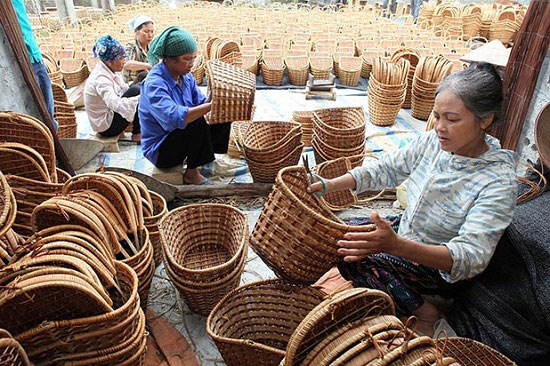
Rattan and Bamboo in Phu Vinh Village (Photo: sovhtt.hanoi.gov.vn)
According to village elders, the craft first emerged in the 17th century, when local families relied on rattan and bamboo products for their daily household needs. Early creations tended to be simple, functional items such as baskets, trays, sieves, and winnowing tools. Yet, even in those early days, villagers were known for their deft hands and meticulous attention to detail. Gradually, as skills were refined and creativity flourished, the products evolved from utilitarian objects into refined works of art. Today, Phu Vinh artisans produce a wide array of items, ranging from household goods and decorative pieces to souvenirs and high-end furniture destined for export markets across the world.
What distinguishes Phu Vinh above all is the outstanding precision of its weaving techniques. Each product undergoes a sequence of carefully executed stages, beginning with material selection. Artisans must choose rattan and bamboo of the right age and texture before splitting, shaving, smoothing, and dyeing the fibres. Once prepared, the strands are woven with exceptional skill, gradually forming intricate shapes and surfaces. The rhythmic interlacing of the fibres results in patterns that are both harmonious and expressive. Many pieces feature traditional Vietnamese motifs such as lotus flowers, dragons, phoenixes, or stylised Chinese characters, giving them a rustic yet sophisticated beauty that reflects deep cultural identity.
Despite the pressures posed by mass-produced industrial goods, Phu Vinh has managed to maintain remarkable vitality. This resilience stems largely from its willingness to innovate while remaining faithful to traditional techniques. In recent years, many craftsmen have experimented with new designs inspired by contemporary aesthetics, producing eco-friendly items well suited to the growing global demand for sustainable lifestyle products. These efforts demonstrate the ability of the craft to adapt and evolve without losing its authenticity. The village has also recognised the potential of cultural tourism. Visitors who come to Phu Vinh can observe the entire crafting process, from the preparation of materials to the final stages of weaving and may even try their hand at simple steps under the guidance of skilled artisans. Such experiences not only deepen appreciation for the craftsmanship but also provide meaningful insight into the values of Vietnamese culture and labour.
A significant milestone came in 2021, when the bamboo and rattan weaving craft of Phu Vinh was officially inscribed as a National Intangible Cultural Heritage of Vietnam. This recognition underscores the crucial role of the village in preserving and promoting the nation’s traditional culture. For the people of Phu Vinh, weaving is far more than an economic activity. It is a treasured inheritance that encapsulates centuries of accumulated wisdom, creativity, and collective memory. Every finished piece, whether a small basket or an elaborate decorative panel, embodies the dedication, artistry, and soulful connection between the artisan and the natural materials they shape.
Today, each product that emerges from Phu Vinh is more than a beautifully crafted object. It is a testament to the enduring vitality of Vietnamese craftsmanship and the cultural spirit that continues to thrive within this historic village.
Tourism Information Technology Center