(TITC) – Situated beside the gentle Nhue River, around 10 kilometres from central Hanoi, Van Phuc Silk Village, now part of Van Phuc Ward in Ha Dong District, has long been recognised as a celebrated destination preserving the finest traditions of Vietnamese silk weaving. With a history spanning more than a thousand years, Van Phuc stands not only as the pride of Ha Dong but also as a symbol of the elegance, refinement, and artistic mastery that characterise Vietnam’s handicraft heritage.
(Photo: Collection)
Historical records trace the origins of Van Phuc’s weaving craft to the reign of King Ly Thai To. Legend has it that A La Thi Nuong, a gifted woman from the ancient Son Tay region, taught the villagers the art of silk weaving. From that moment, the rhythmic sound of wooden looms became inseparable from village life, producing soft, lustrous fabrics that were highly prized by royal courts. For centuries, Van Phuc silk was regarded as one of the finest textiles offered to the kings, celebrated for its quality, beauty, and cultural significance.
Van Phuc silk is renowned for its durability, delicately smooth texture, natural sheen, and remarkable breathability. Each piece of silk embodies the skills of generations of artisans who have perfected the craft through patient labour and artistic intuition. Patterns woven into the fabric are diverse yet consistently elegant, featuring traditional motifs such as “dragon and phoenix”, “four seasons”, cloud patterns, and lotus flowers. From classic hues like deep brown, gold, and crimson to contemporary shades embraced by modern designers, Van Phuc silk retains its traditional charm while continually adapting to evolving aesthetic tastes.
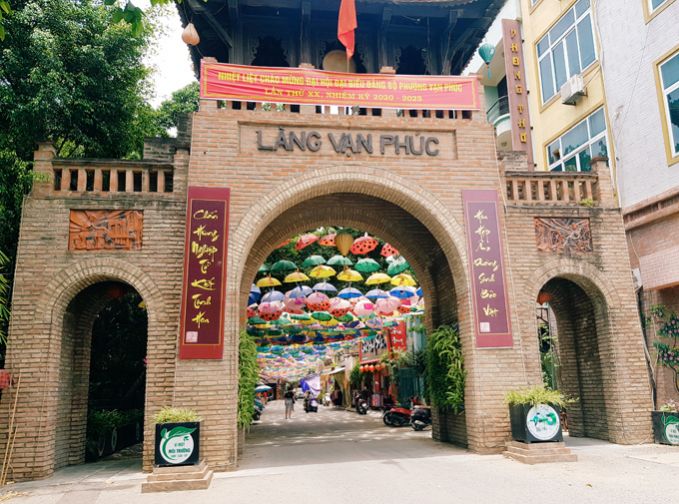
Van Phuc Village gate (Photo: MOCST)
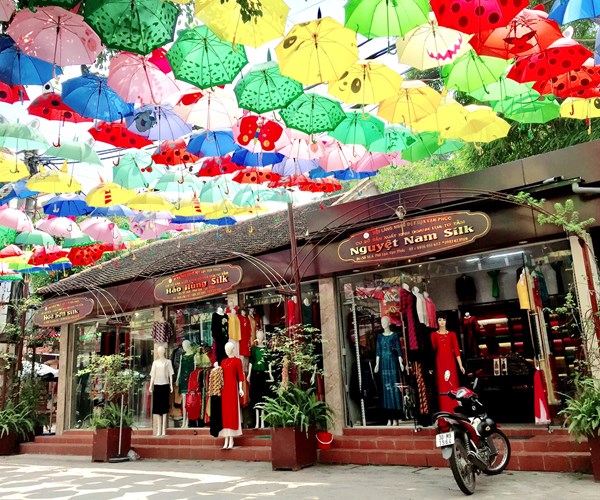
Beyond its craft, Van Phuc has developed into a vibrant cultural tourism destination. Passing through the village gate, visitors are greeted by the atmosphere of a quintessential northern craft village, with its tiled roofs, red-brick pathways, and workshops echoing with the hum of spinning wheels and the steady beat of weaving looms. The Silk Street and exhibition spaces bustle with visitors from across Vietnam and abroad, who come to explore, shop, and learn about the silk-making process from cocoon boiling and fibre reeling to weaving, dyeing, and finishing.
Each November, the annual Van Phuc Silk Festival transforms the village into a lively celebration of its heritage. The festival features weaving demonstrations, traditional music and cultural performances, exhibitions of silk products, and áo dài fashion shows showcasing the village’s finest creations. The event offers an opportunity to honour the extraordinary craftsmanship of Van Phuc artisans and to promote the village’s cultural identity to international visitors.
In the face of rapid industrialisation and the fast-paced evolution of global fashion, Van Phuc has managed to preserve its distinctive position thanks to the perseverance and innovation of its artisans. Many workshops have embraced modern technology and contemporary design trends, helping Van Phuc silk reach new international markets while maintaining the intricate beauty and traditional spirit that define its heritage. This fusion of innovation and tradition allows the craft to thrive while remaining deeply rooted in the cultural identity of the village.
Today, Van Phuc Silk Village continues to stand as a symbol of enduring vitality, creativity, and devotion to craft. The shimmering silk threads produced here do more than form soft, luxurious fabrics, they also weave together centuries of cultural memory, linking past and present in every fold. Each piece of Van Phuc silk carries within it the soul of the village, showcasing the pride, talent, and artistry of Vietnamese craftspeople and illuminating the timeless beauty of Vietnamese culture on the global stage.
Tourism Information Technology Center