(TITC) – Amid the dreamy charm of Hue lies a humble craft village infused with centuries of cultural soul – Sinh Village. Known not only for its vibrant early-spring wrestling festival, the village is also celebrated as the birthplace of one of Vietnam’s most distinctive folk art traditions: Sinh Village paintings. For more than four centuries, these rustic yet vividly colored works have remained an integral part of local life, standing as enduring witnesses to a cultural heritage found almost nowhere else.
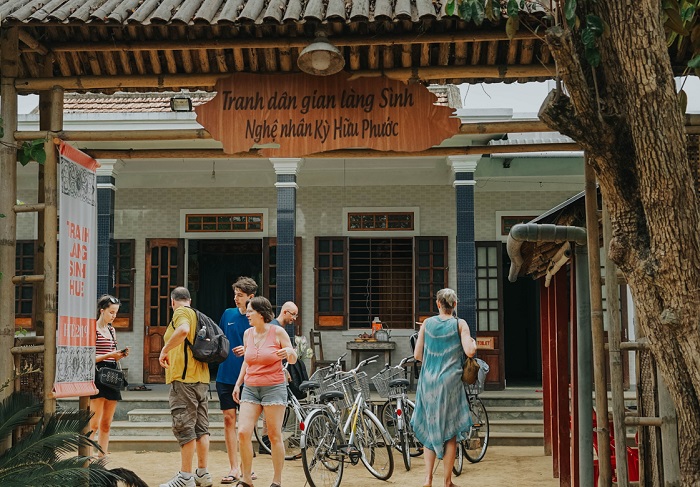
Located about 10 kilometers from central Hue, Sinh Village – historically known as Lai An in Phu Vang District – has been practicing this craft since the 17th century, according to researchers. The art form emerged alongside the ancient spiritual customs of river-dwelling communities.
Unlike the decorative aesthetics of northern folk paintings such as Dng Ho or Hang Trong, Sinh Village paintings serve deeply spiritual and ritualistic purposes. For generations, Hue people believed that every person possesses both a “soul” and a “spirit essence,” and paintings were used in rituals for peace, protection, good harvests, and favorable weather. Some families even used the paintings as symbolic effigies to dispel misfortune and invite blessings.
Over time, the artisans of Sinh Village expanded their repertoire beyond ritual paintings, developing new themes for education, entertainment, and home décor. This creative flexibility helped lift the craft beyond its ritual roots, transforming it into a cultural emblem of Huế.
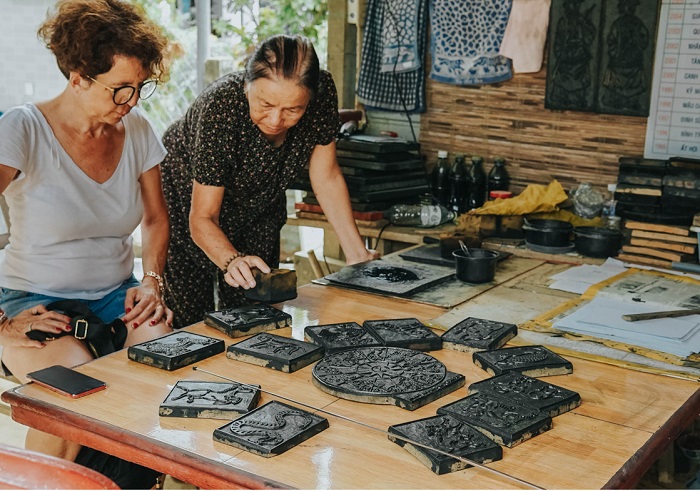
Creating a Sinh Village painting is a meticulous, multi-step process: selecting the wood, carving the printing blocks, printing, and then hand-coloring. The blocks are carved from thi wood – a soft yet durable material ideal for fine carving. The prints are made on dó paper coated with diep, a paste of finely ground seashells mixed with glutinous rice glue, which gives the paper its signature luminosity and subtle shimmer.
After the black ink impression is made, artisans hand-paint each piece. There are no rigid rules or templates; color choices – reds, yellows, greens, purples – come from the painter’s intuition and mood. As a result, even prints from the same woodblock are never identical. Each artwork is a one-of-a-kind creation carrying the personal imprint of its maker.
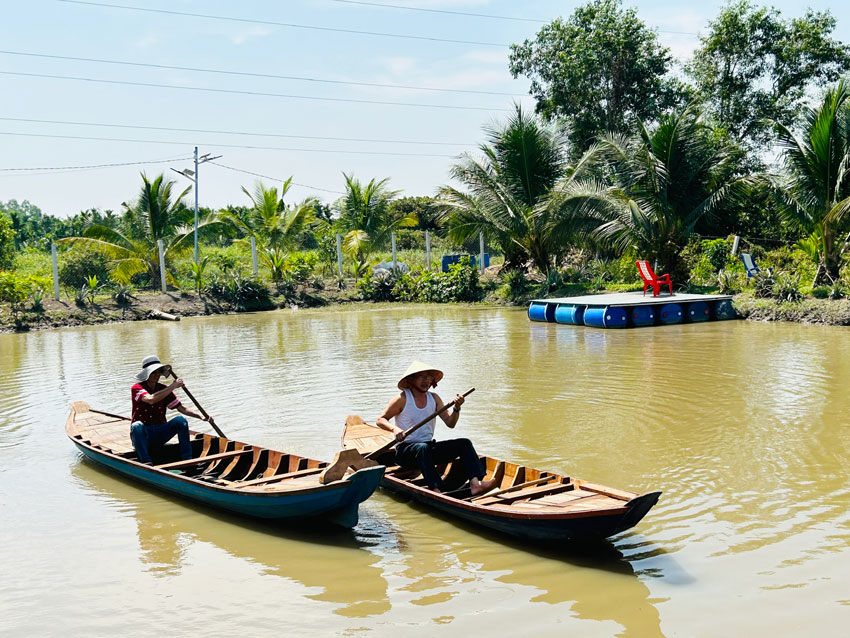
Today, Sinh Village has become a distinctive cultural stop on Hue’s travel map. Visitors can arrive easily by motorbike, car, or even by taking a scenic boat ride along the Perfume River. Once there, you can try your hand at traditional woodblock printing, listen to artisans share stories of their craft, and paint your own folk artwork. Each piece you bring home is more than a souvenir – it is a fragment of Huế’s gentle, soulful spirit.
Travelers may also time their visit to coincide with the Sinh Village Wrestling Festival, held annually on the 10th day of the first lunar month. This centuries-old celebration showcases the community’s martial spirit and collective wish for a prosperous, peaceful year.
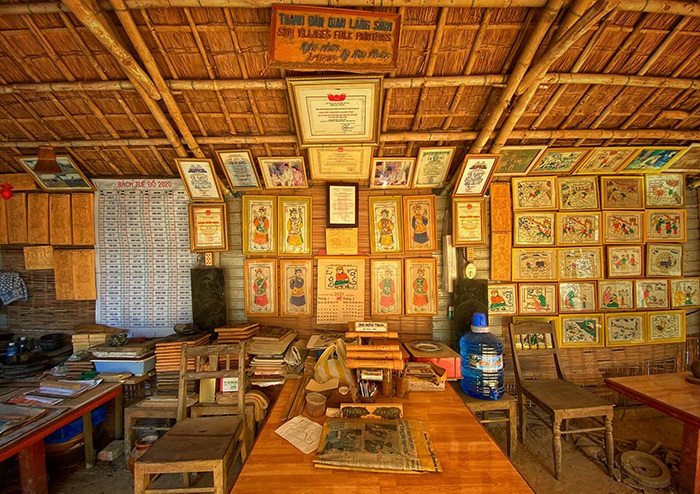
In an era when traditional values often fade amid modern life, Sinh Village paintings endure as a symbol of rustic, profound artistry. They are not merely a craft, but a keepsake of memory – a reflection of Huế’s soul. Within each simple image lies the worldview of the people here: love for nature, respect for humanity, and a constant aspiration toward goodness.
Visiting Sinh Village is therefore more than a cultural excursion – it is a journey back to the roots of Vietnamese heritage, where folk art continues to live quietly, gracefully, and resiliently through time.
Tourism Information Technology Center