(TITC) – Nestled in the heart of To Tung land, K’Giang village emerges peacefully amid the green mountains and forests, preserving the unique cultural heritage of the Ba Na people. Here, Homestay A Ngui offers an authentic community tourism experience, inviting visitors to explore the rustic beauty of the Central Highlands and connect with the rhythms of village life.
A Warm, Authentic Highland Retreat
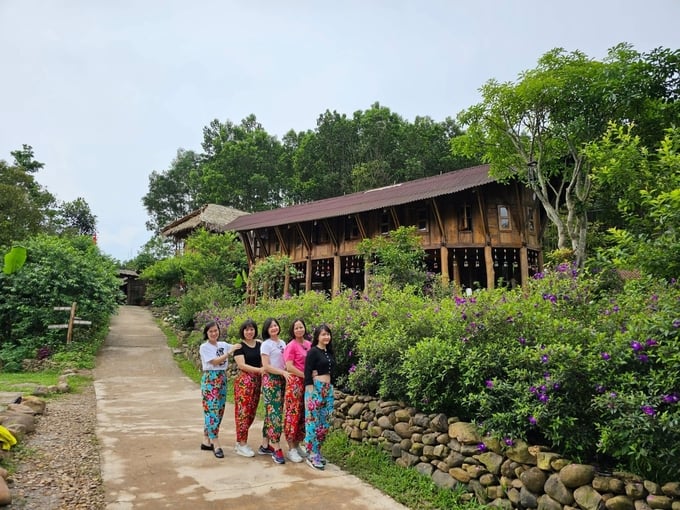
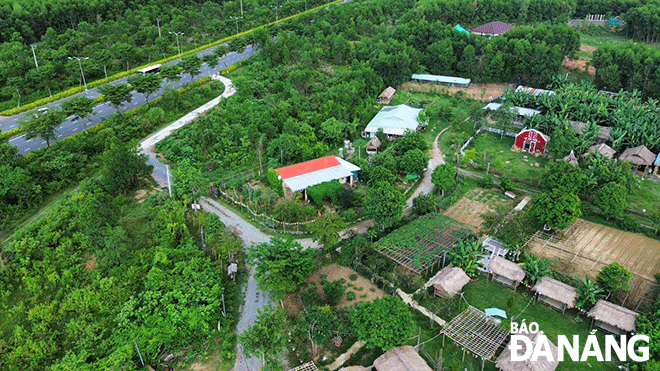
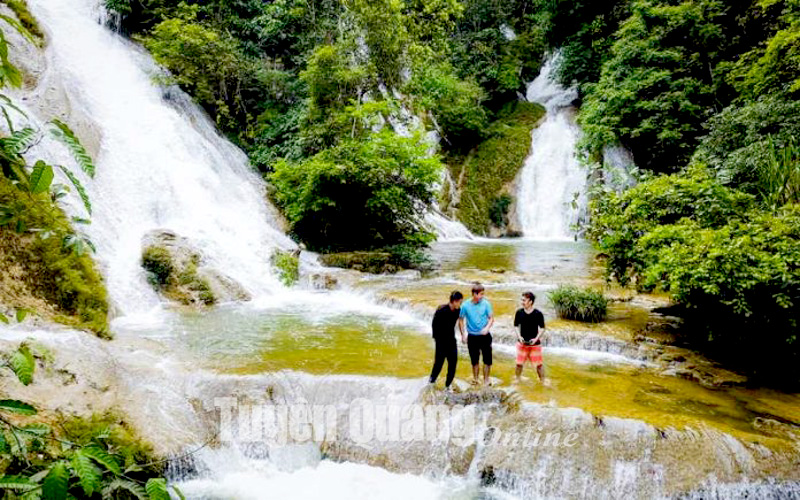
Built using forest wood, thatched roofs, and red basalt soil, Homestay A Ngui exudes warmth and simplicity. Surrounded by coffee gardens, cornfields, ancient trees, and the gentle murmur of streams, the homestay creates a serene escape. Visitors entering the space feel transported to another world, where time slows, and the forest breeze carries the scent of the mountains through every leaf.
Mornings greet guests with the crowing of roosters and mist rolling over stilt houses. Evenings are spent around the central fire, listening to hosts recount village life, farming cycles, and the gong festivals that have marked generations of Ba Na culture.
Living the Village Experience
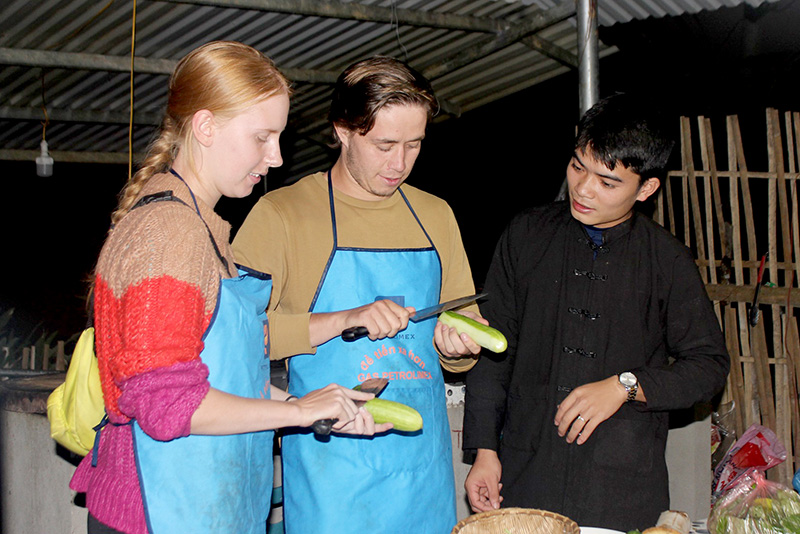
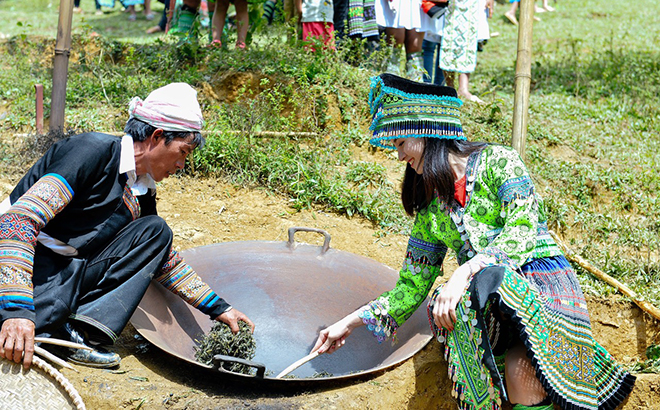
At Homestay A Ngui, tourism is more than a place to rest – it is an immersive journey into local life. Guests can accompany villagers to the fields to plant rice, pick coffee, or engage in traditional crafts such as brocade weaving, basket making, and bamboo musical instrument production. These hands-on experiences provide a rare glimpse into the daily practices and heritage of the K’Giang community.
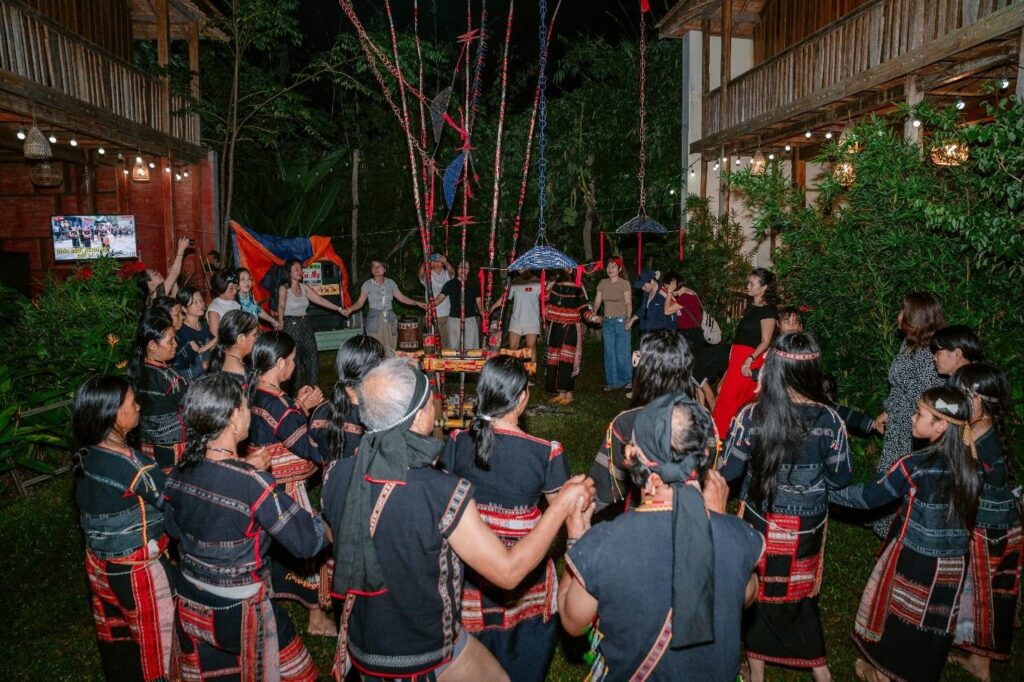
Cuisine is an essential part of the experience. Signature dishes like grilled bamboo rice, roasted chicken, bep leaf soup, and can wine offer the rich flavors of the highlands. Evenings culminate in communal gatherings by the fire, where gongs are played, xoang dances performed, and stories shared – moments of cultural exchange that are both intimate and vibrant.
A Model of Community-Led Tourism
Homestay A Ngui is fully community-owned. Locals manage guest services, cooking, cultural activities, and environmental preservation, guided by the principle of self-governance. Support from local authorities in infrastructure, tourism skills training, and communication has helped residents develop sustainable livelihoods while maintaining their cultural identity.
This approach has fostered heightened community awareness. Residents now recognize that tourism is not only an income source but also a way to cherish their homeland and preserve their traditions. Many households have expanded their activities beyond farming, offering clean agricultural products and handicrafts for visitors.
A Bright Spot for Rural Tourism in Gia Lai
In the wider context of rural tourism development in Gia Lai, Homestay A Ngui stands out as a successful model in ethnic minority areas. Supported by the provincial tourism sector, K’Giang village is poised to become a unique eco-cultural destination, linked to nearby relics, primeval forests, and waterfalls in the Kbang region.
Future plans include investing in infrastructure, improving service quality, training local staff, and promoting the homestay to wider audiences, ensuring it becomes a must-visit destination in Eastern Gia Lai.
Harmony Between People and Nature
Amid modern life, Homestay A Ngui retains the pristine beauty of the mountains and forests and the soul of the Ba Na people. Every smile, meal, and greeting reflects hospitality, harmony, and a deep connection with nature. Visitors leave not only with memories of rest and relaxation but also with an understanding of the village’s identity, culture, and spirit – where tourism is inseparable from the life and breath of the community.
Tourism Information Technology Center