(TITC) – Amid the fast-paced modern life of Hanoi, there remains a quiet corner where the fragrance of tradition lingers – Vong Village, located in Cau Giay Ward. Mention com (young green rice), and one immediately thinks of this delicate, elegant treat synonymous with Hanoi’s autumn. It is Vong Village that gives this gift its soul, preserving a craft that embodies both heritage and artistry.
The craft of making com Vong is believed to date back several centuries. More than a livelihood, it is an art form demanding precision and patience. The process begins with nep cai hoa vang, a premium variety of sticky rice known for its natural fragrance and tenderness. The rice is harvested when the grains are still young and milky, then gently roasted in cast-iron pans over a steady fire to preserve their aroma.
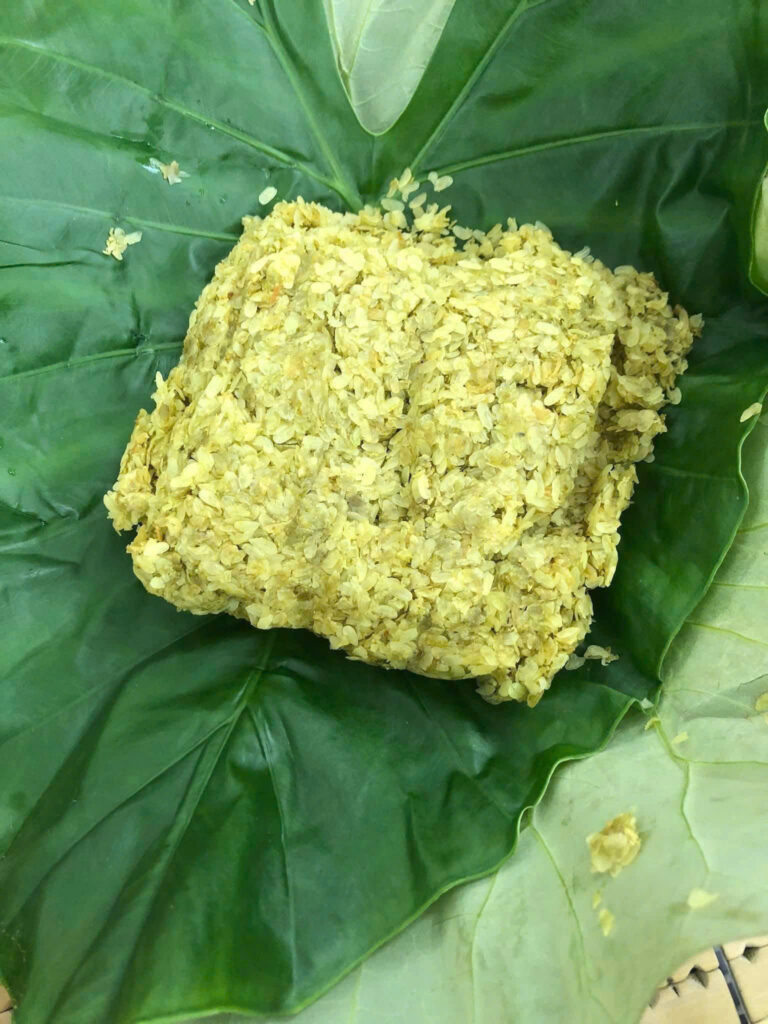
The autumn flavour of Hanoi radiates from Vong young green rice village (Photo: TITC)
Once lightly cooked, the grains are pounded in stone mortars and carefully sifted to remove the husks. This pounding process requires the utmost skill: each stroke must be even and deliberate so that the grains become thin and tender without breaking apart. The finished com is then wrapped in fresh lotus leaves and tied with golden rice straw, a humble yet beautiful package that carries with it the scent of the fields and the breath of the countryside.
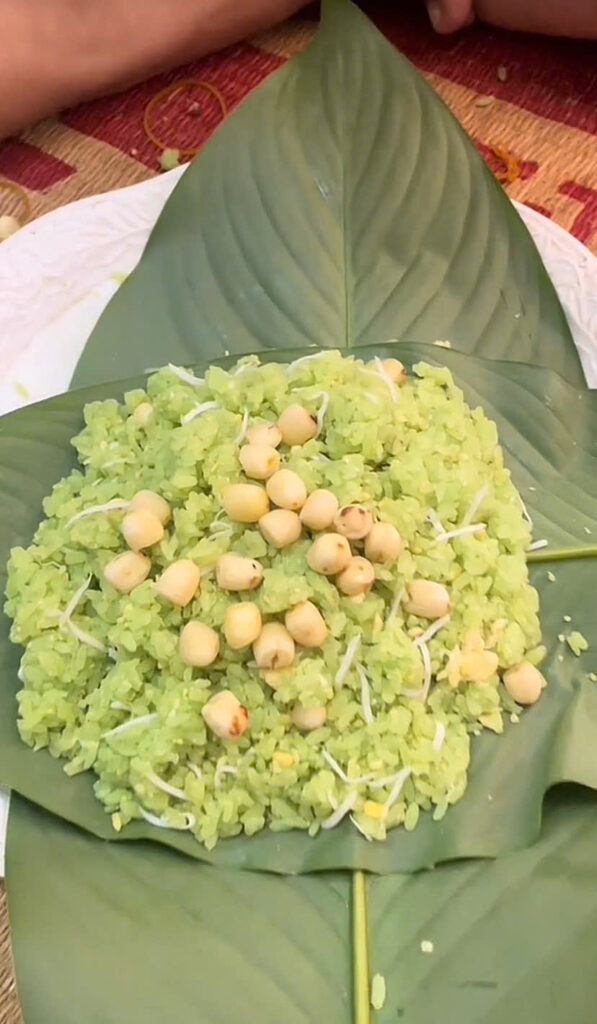
Young green rice with lotus seed (Photo: TITC)
What makes com Vong special is its gentle sweetness, soft texture, and subtle lotus fragrance, a harmony that sets it apart from similar products elsewhere. To enjoy com properly is to savour it slowly, appreciating its supple, fragrant character. It is not eaten to fill the stomach but to capture the essence of autumn in each bite.
The most traditional pairing is ripe banana, the creamy richness of the fruit blending with the chewy sweetness of com to create a flavour that feels both rustic and refined, like a whisper of Hanoi’s autumn passing through your senses.
From this humble ingredient, generations of Hanoians have created a range of exquisite dishes: banh com (sweet rice cake filled with mung bean paste), che com (sweet soup), and cha com (pork patties with green rice). These dishes are not only culinary delights but also vessels of nostalgia, reminders of family gatherings, festivals, and the enduring charm of traditional Vietnamese cuisine.
Today, amid the rapid urbanization of Hanoi, only a few households in Vong Village continue the old craft. Yet, those who remain treat it not just as a trade, but as a duty to preserve a piece of the city’s soul. Every autumn, visitors flock to Vong not only to buy com but to experience the tranquil rhythm of a traditional craft village nestled within a bustling metropolis.
For Hanoians, com Vong is more than food, it is memory, identity, and the embodiment of the city’s gentle spirit. Within each jade-green grain lies the devotion of artisans, the flavour of the land, and the essence of Hanoi’s thousand-year-old culture. No matter how much the city changes, the fragrance of com Vong will forever linger, a tender reminder of the simple, elegant beauty that defines the capital.
Tourism Information Technology Center