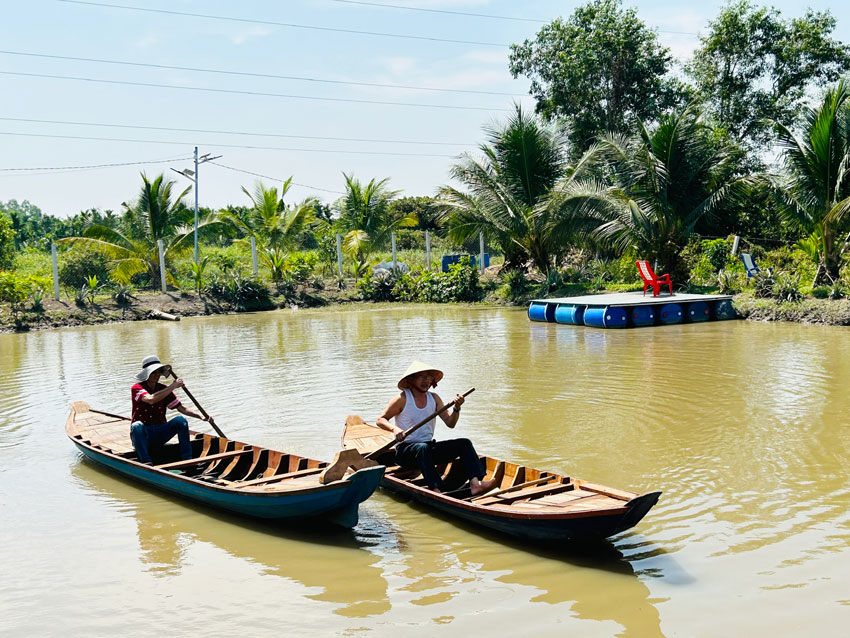
(TITC) – Ben Tre has long been known as the “land of coconuts” in the southwestern region of Vietnam, where endless rows of coconut palms stretch along the Cuu Long River. It is here that a unique traditional craft has flourished for over a century: the making of coconut candy – a sweet gift deeply associated with the land and people of the delta islands.

The craft of coconut candy in Ben Tre (now part of Vinh Long Province) emerged in the 1930s in Mo Cay district. The first candies had a distinctive taste: rich, sweet, and creamy from fresh coconut milk, giving rise to the renowned “Mo Cay candy,” which later became famous nationwide as Ben Tre coconut candy.
Under the skillful hands of experienced artisans, each candy carries the essence of its homeland. The creamy aroma of coconut milk blends harmoniously with the gentle sweetness of malt and golden sugar, producing chewy, sweet confections that are delicate on the palate. Malt is made from carefully germinated glutinous rice, while the coconut milk must come from mature, rich coconuts. The sugar is always golden cane sugar, offering a mild sweetness rather than the harshness of refined white sugar.
Although the candy-making process may seem simple, it demands precision and years of experience. Before modern machinery, artisans prepared everything by hand from dawn: grating coconuts, extracting milk, cooking malt, and stirring the candy mixture over large copper pans set on blazing fires. Constant stirring for hours is critical to achieve the right consistency and distinctive aroma. Any lapse in attention can result in burnt candy or improper texture.
Once the mixture reaches the ideal consistency, it is poured onto oiled surfaces, rolled flat, and cut into small bars. Each piece is wrapped in a thin rice paper layer to maintain softness, then encased in colorful outer paper. This manual wrapping demonstrates the artisans’ dexterity and rhythmic workflow.
Today, modern equipment has been introduced to improve efficiency and quality. Yet, traditional coconut candy workshops continue to preserve centuries-old techniques, maintaining the authentic flavor. To meet evolving market demands, Ben Tre artisans have innovated with new flavors such as durian, peanut, cocoa, and pandan, offering fresh experiences while retaining the soul of traditional candy.
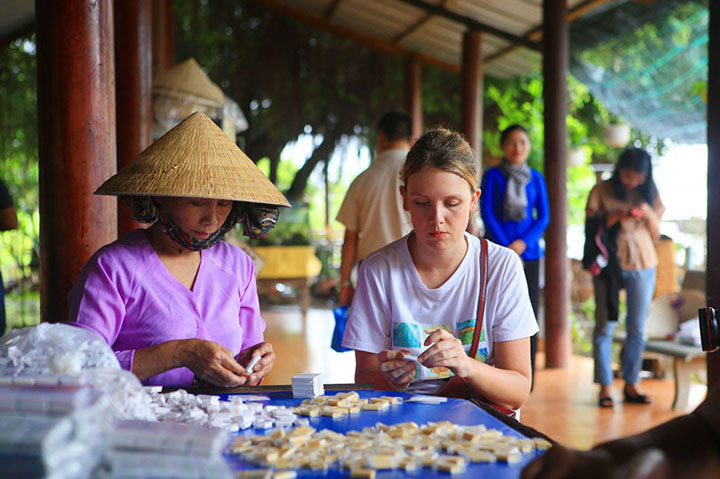
Beyond production, the village has become a popular tourist destination. Visitors can explore traditional candy workshops in Mo Cay Nam, Mo Cay Bac, Chau Thanh, and even the old city of Ben Tre. Tours allow visitors to witness candy-making firsthand, hear about the craft’s history, and even create their own unique candies. Eco-tourism experiences combining candy-making have become increasingly popular, attracting domestic and international tourists alike.
Coconut candy is not just a product; it is a vital part of Ben Tre’s cultural heritage. Preserving and developing the craft supports local tourism, creates jobs, and boosts income for residents. Ben Tre coconut candy has crossed regional boundaries to become a recognized Vietnamese specialty at international fairs. Producers have modernized packaging, registered brands, achieved food safety certifications, and exported products worldwide. For visitors, coconut candy remains an essential souvenir from the delta islands.
In 2024, Ben Tre coconut candy was honored in Taste Atlas’s list of the 70 best sweets in the world, affirming its status as a unique culinary and cultural symbol of Vietnam.
The Ben Tre coconut candy village represents not only economic value but also cultural identity, preserving traditional flavors across generations. As sustainable tourism develops, the village continues to serve as a vibrant destination, enriching the cultural and gastronomic landscape of the southwestern region.
Tourism Information Technology Center