(TITC)- Tra Su Melaleuca Forest, located in Van Giao Commune (Can Tho province), is widely recognized as one of Vietnam’s most successful examples of harmonizing ecotourism development with wetland ecosystem conservation. Covering more than 845 hectares, Tra Su has transformed over four decades from low-lying, alum-contaminated land into a thriving nature reserve representing the distinct ecological identity of the western Hau River region.
A “Green Paradise” of the Flooded Melaleuca Ecosystem
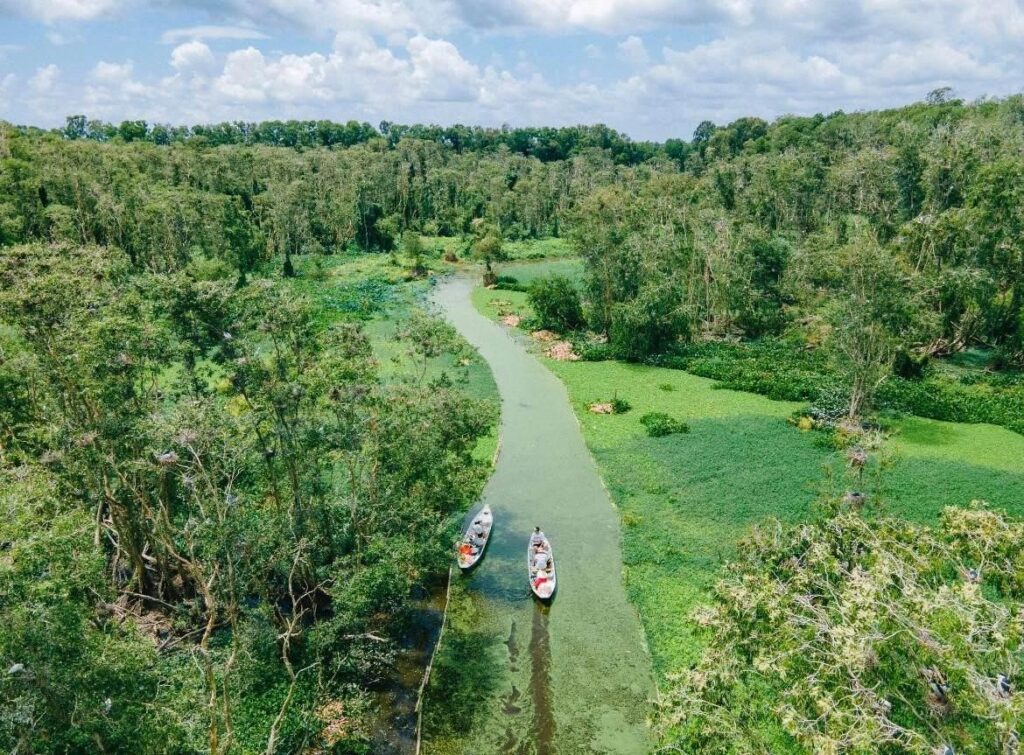
Formed in the 1980s, Tra Su has grown into a signature wetland ecosystem. During the flood season, its surface is blanketed by carpets of bright green water ferns, mirroring rows of Melaleuca trees that stretch into the distance. The peaceful soundscape – birds calling, water lapping, breezes rustling through leaves – creates an atmosphere that feels entirely removed from urban life. For many visitors, entering Tra Su is like stepping into a “green paradise,” a space to slow down and reconnect with nature.
Scientific studies have recorded more than 140 species of wild animals, including rare waterbirds such as storks, grey herons, moorhens and the iconic Asian openbill, along with over 150 species of plants typical of flooded areas. This biodiversity plays a vital role in regulating water flows, preventing erosion, maintaining soil quality and sustaining the ecological balance of the lower Mekong region.
Tra Su is not only a habitat for wildlife but also serves as a natural classroom for environmental education, scientific research and nature-based learning. Its ecological richness has made it a model of conservation linked with responsible tourism development.
From a Protected Forest to a Major Ecotourism Destination
For years, Tra Su was known primarily as a protected forest. However, strategic planning and investment – especially between 2017 and 2024 – transformed it into one of Can Tho’s most renowned ecotourism destinations, attracting hundreds of thousands of visitors annually.
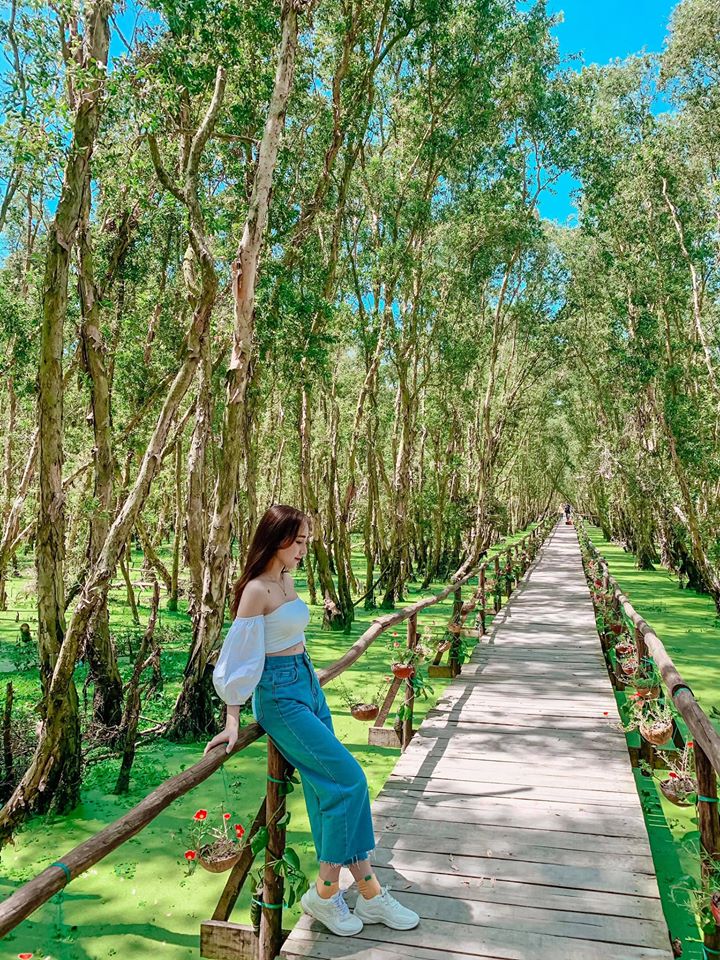
The forest’s most iconic feature is the “Thousand-Step Bamboo Bridge,” a 3,800-meter walkway recognized as the longest bamboo bridge in Vietnam. Winding through the Melaleuca canopy, the bridge offers panoramic views of the forest, giving visitors an immersive sensory experience – breathing in the fresh scent of the trees, listening to birdsong and feeling the gentle breeze.
Equally captivating is the sampan tour through the forest’s canals. Gliding over surfaces covered with floating duckweed, visitors are guided by local boat drivers who share stories of the flood season, local livelihoods and long-standing efforts to protect the forest. Each journey becomes a quiet lesson in the harmony between humans and nature.
A “3-in-1” Model: Conservation – Ecotourism – Community Benefits
Tra Su is one of the few wetland forests in the Mekong Delta operating under a “3-in-1” model that combines strict ecological protection, sustainable tourism and support for local livelihoods.
Local authorities and management units enforce rigorous regulations to safeguard the biological core zone, control exploitation and prevent illegal hunting. Tourism routes are carefully designed to minimize disturbance to wildlife, while activities follow the principles of “green – clean – sustainable.” Visitors are encouraged to use environmentally friendly modes of transport such as rowing boats, electric vehicles and walking paths. Environmental education is integrated into all tourism services.
Surrounding communities – mainly farmers, fishermen and rural women – benefit directly from tourism. They receive training in boat operations, culinary services, homestay management and visitor hospitality. Tourism income helps improve their livelihoods and, importantly, turns residents into committed protectors of the forest, as their prosperity is intertwined with ecological preservation.
A Symbol of Sustainable Development in the Southwest
From a barren landscape in the past, Tra Su has evolved into a flagship destination in Can Tho’s rural–ecological–community tourism strategy and a point of pride for the entire Mekong Delta. Visitors come not only to admire the scenery but to understand how a community can restore nature, live in harmony with it and use tourism as a tool for conservation.
With its unique ecosystem, responsible management model and strong community involvement, Tra Su Melaleuca Forest stands as a compelling example of Vietnam’s potential for sustainable ecotourism – an experience that captures both the beauty and the spirit of the river region.
Tourism Information Technology Center